
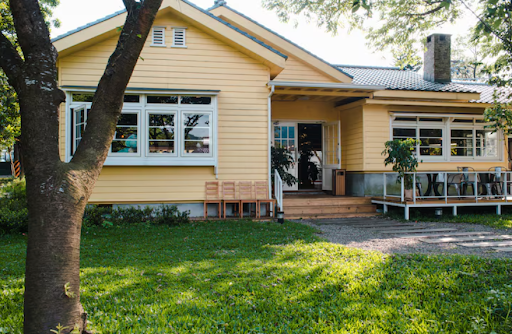
Searching for land for sale in the Pacific Northwest often turns up a mix of waterfront lots and inland acreage.
There is no clear way to compare them side by side. Waterfront parcels come with sweeping views and a premium price tag. Inland lots promise more space for less money.
The real question is not which option looks better in photos. It comes down to which one gets you from purchase to permit without a costly surprise.
This guide breaks down the buildability, cost, and permitting differences so you can choose land that matches your goals in Washington State and the surrounding region.
Waterfront land carries prestige and price appreciation potential. Inland land typically offers more buildable certainty and a smoother permitting path.
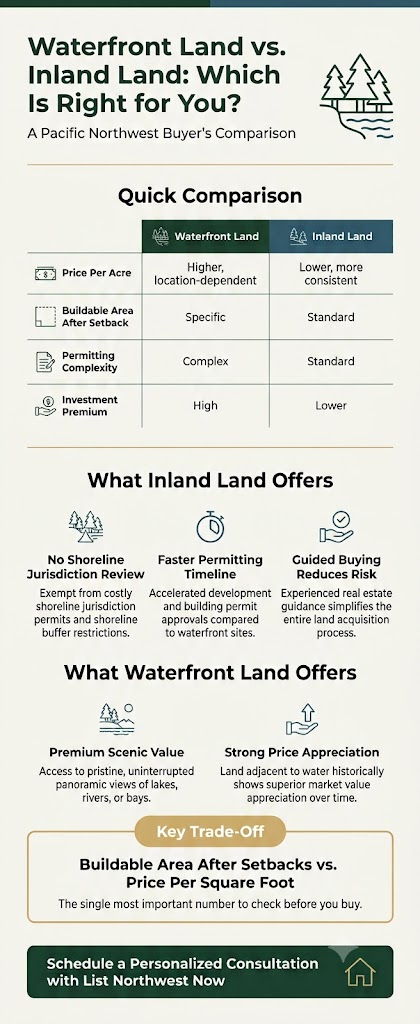
Quick Comparison: Waterfront Land vs. Inland Land in the Pacific Northwest
Before you compare price tags, compare what each parcel actually lets you build.
| Factor | Waterfront Land | Inland Land |
| Price per acre | Higher, location-dependent | Lower, more consistent |
| Buildable area after setback | Reduced by shoreline rules | Rarely affected |
| Permitting complexity | Higher, multi-agency review | Lower, standard local review |
| Utility access | Varies by shoreline distance | Typically more direct |
| Resale and investment premium | Strong, limited inventory | Steady, broader buyer pool |
| Typical closing timeline | Longer, due diligence heavy | Shorter, fewer contingencies |
What Inland Land Offers Pacific Northwest Buyers
Inland land gives you a more predictable path from purchase to permit. That predictability often matters more than the view.
If you plan to build, a lot that lets you use nearly all of its listed acreage is worth more to your project than a lot that looks bigger on paper.
“According to Northwest Multiple Listing Service’s May 2026 market report, active listings increased 16.8% year over year to 21,381 homes at the end of May, giving buyers more options as inventory continued to expand across the region.”
Predictable Buildability Without Shoreline Jurisdiction Review
Land located away from marine and lake shorelines generally falls outside the setback rules set by Washington’s Shoreline Management Act. That single fact changes how much of a parcel you can actually build on.
More Predictable Permitting Timelines
Waterfront construction usually triggers review from more than one agency, since shoreline work intersects state environmental rules and local building codes.
Inland construction typically moves through a single local permitting track. Fewer review layers mean fewer places for a project to stall.
Working With a Licensed Guide Reduces Land-Buying Risk
Real estate professionals in Washington State must hold an active broker license issued by the Washington State Department of Licensing, along with fiduciary and disclosure obligations.
Before choosing a guide for a land purchase, confirm the license is active, ask whether they have verified the parcel’s buildable area, and ask how shoreline or zoning issues on file would be disclosed to you.
Buyers who skip this step tend to discover setback problems after they sign, not before.
National data backs this pattern: “agent-assisted real estate transactions closed at a median price 18 percent higher than self-directed sales in the past year, according to the National Association of Realtors 2025 Profile of Home Buyers and Sellers.”
List Northwest Now’s Real Estate Investment Guidance and Personalized Real Estate Consultation services are built to check these details before you commit.
What Waterfront Land Offers
Waterfront parcels in the Pacific Northwest hold genuine appeal. They offer direct water access, mountain and sound views, and a level of scarcity inland lots cannot match.
“Waterfront homes in the Seattle market sold at a median price of $898,900 in 2023, well above comparable inland properties, based on the Northwest Multiple Listing Service Waterfront Homes report.”
That figure reflects 2023 sales data and is the most complete regional dataset available for this comparison. Waterfront land can still appreciate faster than inland parcels over time, and the trade-off usually shows up once a buyer starts the permitting process.
The Key Differences That Matter
The price difference between waterfront and inland land tells only part of the story. What happens after closing tells the rest.
Buildable Area After Setbacks vs. Price Per Square Foot
Waterfront land commands a higher price per acre, but that price often buys less usable building space than the listing suggests.
A one-acre waterfront lot with a 50-foot shoreline setback can lose a meaningful share of its footprint to the buffer zone before you draw a single blueprint line. Buyers who skip a required shoreline permit face real consequences.
“Washington law allows civil penalties of up to $1,000 per day per violation, according to the Washington Department of Ecology’s Enforcing the Shoreline Management Act report.”
Calculating price per buildable square foot, not just price per acre, gives you the real comparison.
Investment Predictability vs. Prestige Value
Waterfront land holds prestige and a strong appreciation history, but that value depends on your ability to actually build or sell the parcel as advertised.
Inland land trades some of that prestige for a more predictable investment outcome, since fewer regulatory variables stand between purchase and use.
Which Option Fits You Best?
Waterfront land best fits buyers who prioritize lifestyle and scenic value and are prepared to verify buildable area and shoreline permitting before making an offer.
Inland land best fits buyers and investors who want a predictable path from purchase to permit, guided by a local expert who checks buildability before you commit.
Frequently Asked Questions (FAQs)
Q1. Is waterfront property in this region pricier than inland land?
Yes. Waterfront homes in the Seattle area sold at a median price of $898,900 in 2023, according to Northwest Multiple Listing Service data, reflecting limited shoreline inventory and strong buyer demand.
Q2. What is a shoreline setback?
A shoreline setback is a required buffer distance between a structure and the water’s edge under Washington’s Shoreline Management Act. Setbacks can range from 20 feet to over 100 feet depending on the local designation, directly reducing usable building area.
Q3. Do I need a permit to build on waterfront land in Washington State?
In most cases, yes. Shoreline development typically requires a permit under state and local shoreline master programs, and building without one can trigger civil penalties.
Q4. How does a local expert help with a land purchase in this market?
A licensed professional can flag zoning restrictions, shoreline jurisdiction issues, and permitting timelines before you make an offer, helping you avoid surprises after closing.
Ready to Compare Land for Sale in the Pacific Northwest?
Waterfront and inland parcels each serve a different kind of buyer. The right choice depends on how you plan to use the property.
Schedule a personalized real estate consultation with List Northwest Now to review the buildable area, permitting requirements, and investment potential before you commit to your next parcel.
Leave a Reply